


What is a Square Junction Box? Selection & Mounting Tips
What is a Square Junction Box? Selection and Mounting Tips
Behind the walls of any building, electrical installation networks rely on central junction points where power lines are safely split and routed to different rooms, sockets, and switches. The protective enclosures engineered to house these wire splices and connections are called electrical junction boxes (also known as back boxes or conduit boxes).
Beyond understanding the basic role of an electrical junction box, selecting the correct box configuration dictates the overall safety and maintenance ease of a project. While round junction boxes are widely used in simple runs, square junction box solutions have become essential in modern buildings with higher wiring densities due to their generous internal capacity. In this guide, we will examine junction box types, the advantages of square boxes, and key best practices for flush-mounted installation.
What is a Square Junction Box and When is it Preferred?
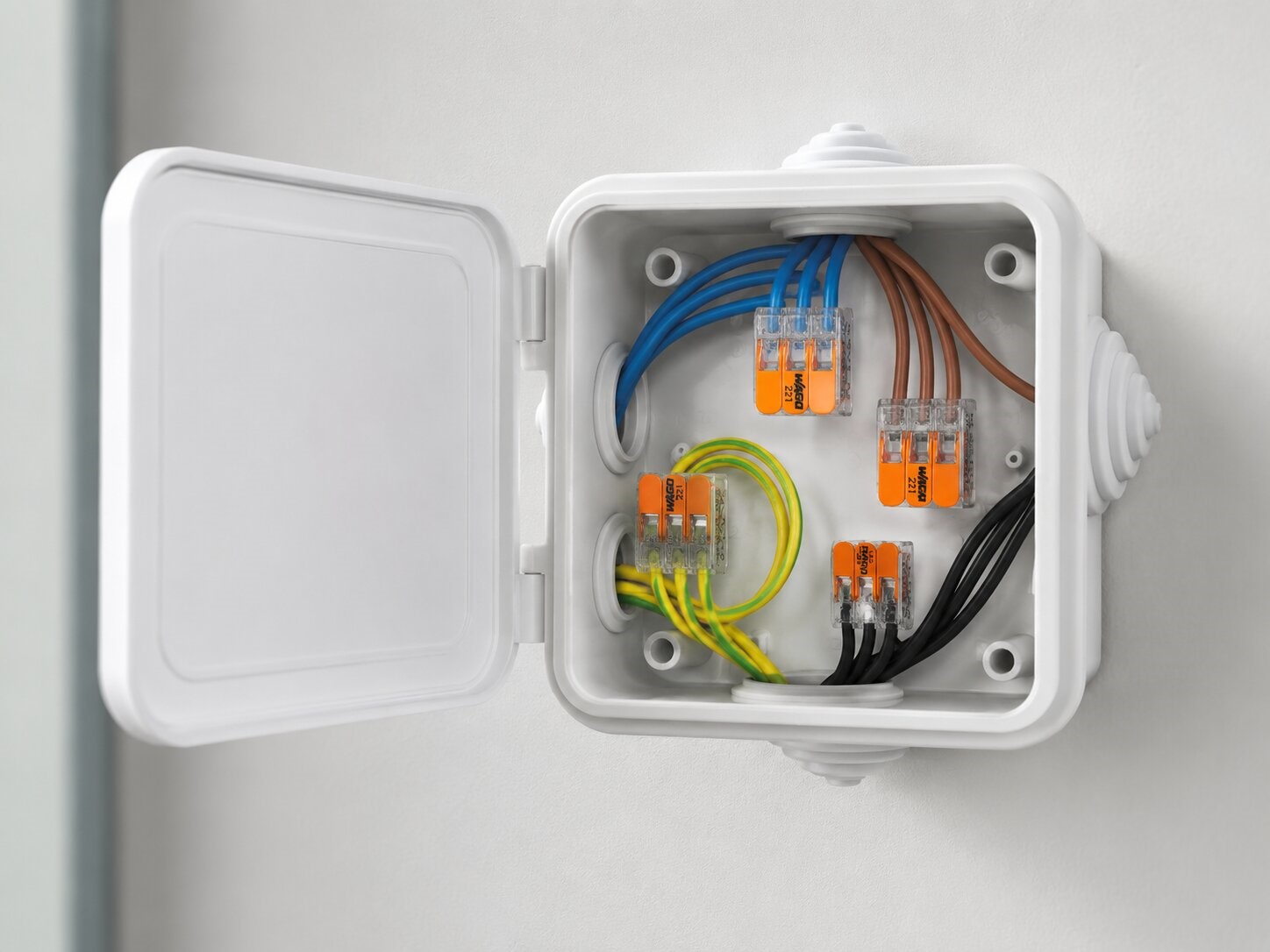
A square junction box is a square-shaped enclosure designed to house, split, and protect electrical wire connections. Used primarily as a flush-mounted junction box embedded directly inside brick or concrete walls, it offers significant internal volume compared to traditional round models.
You should opt for a square junction box instead of a standard round box in the following scenarios:
- High Wiring Density: When multiple electrical lines (lighting circuits, power sockets, switch returns) meet at a single intersection, round boxes can cause wire crowding. Square junction boxes provide ample space for neat, stress-free wire routing.
- Use of Terminal Blocks and Push-In Connectors: Connecting conductors using terminal strips or push-in wire connectors (such as WAGO connectors) requires more physical volume than traditional wire twisting. A square box comfortably accommodates these modern connectors.
- Future Circuit Expansion: For strategic distribution points where additional sockets or light fixtures might be added later, choosing a spacious square junction box allows electricians to leave sufficient spare wire length for future splices.
Types of Electrical Junction Boxes
Electrical junction boxes are categorized by their mounting method, material structure, and intended environment:
- Flush-Mounted Boxes: Embedded directly inside walls during masonry or plastering work. These are the most common choice for residential homes and offices.
- Surface-Mounted (Moisture-Proof) Boxes: Mounted on the outer wall surface, usually featuring IP55 or IP65 water and dust seals. These are preferred for outdoor perimeter walls, garages, and industrial sites.
- Ceiling / Light Fixture Boxes: Installed at ceiling points to support light fixture weight while concealing wiring splices.
- Drywall / Hollow Wall Boxes: Specialized boxes equipped with clamping lugs designed specifically for plasterboard, drywall, and timber installations.
Best Practices for Flush-Mounted Junction Box Installation
Executing a sturdy, code-compliant junction box installation requires careful attention to these key assembly steps:
- Correct Recess Depth: Junction boxes are generally positioned 15 to 30 cm below ceiling level. The wall cavity depth should allow the face of the box to sit perfectly flush with the finished plaster layer. Boxes buried too deep or protruding past the plaster cause issues during cover attachment.
- Punching Cable Knockouts: Only open the necessary knockout holes around the box chassis that correspond to incoming conduit lines. Over-punching extra holes allows plaster mortar to seep inside during wall finishing.
- Securing with Mortar: When seating the box inside the wall cavity, fill the surrounding gaps firmly with mortar or plaster adhesive, ensuring the box is level before the material sets.
- Installing the Protective Cover: After completing all wire splices and securing connectors, seal the enclosure neatly using a matching spring-loaded or screw-fixed junction box cover plate.
For long-lasting infrastructure built to strict insulation standards across your installations, explore Makel's Square Surface Mountage (100x100) box module.
The Hidden Guardians of Safe Electrical Systems
Hidden behind wall surfaces, junction boxes directly influence both the structural safety and serviceability of your electrical grid. Specifying spacious square junction boxes in areas with dense wiring routes mitigates thermal buildup risks around wire splices while offering technicians a comfortable workspace during maintenance. Manufactured from high-grade polymers, Makel's enclosures ensure your building's electrical core remains protected for decades.