






What Do L, N, and PE Mean in Electricity? Wire Colors and Safety Guide
Electrical installations are universal systems where complex engineering infrastructures are symbolized by simple letters and specific colors. Whether you are repairing a socket, connecting a lighting fixture, or examining a distribution board, the letters L, N, and PE are vital for the safe operation of the system. Not knowing the technical meaning of these letters and wire colors can lead not only to device malfunctions but also to irreversible electric shock and fire risks.
In this guide, prepared according to modern electrical standards, we will examine the alphabet of the wiring world and the rules for safe connection in detail.
The Alphabet of Electrical Wiring: Understanding L, N, and PE
Electric current moves in a cycle. The energy coming from the source must power the device and then return safely. This cycle is carried out through three main conductors, each with a different task:
-
L (Line / Phase) - Phase: Standing for "Line," L represents the live wire in the system. It is the primary conductor that carries electrical energy from the power plant or transformer to your device. This is the wire that lights up a neon tester (voltage tester) when touched. It is highly dangerous and should never be touched with bare hands while energized.
-
N (Neutral) - Neutral: Standing for "Neutral," N is the return path that completes the circuit. After the current from the phase passes through the device and does its work, it returns to the source through the neutral line. In an ideal system, there is no voltage on the neutral line; however, one should always act with caution as if there is energy due to the risk of network imbalances.
-
PE (Protective Earth) - Earth/Ground: Standing for "Protective Earth," PE is the safety insurance of the installation. It prevents a person from being electrocuted by directing any electrical leakage that may occur on the metal body of the device directly to the ground. The PE line does not carry current under normal operating conditions; it only activates during a fault or leakage.
Wire Color Codes and Standards
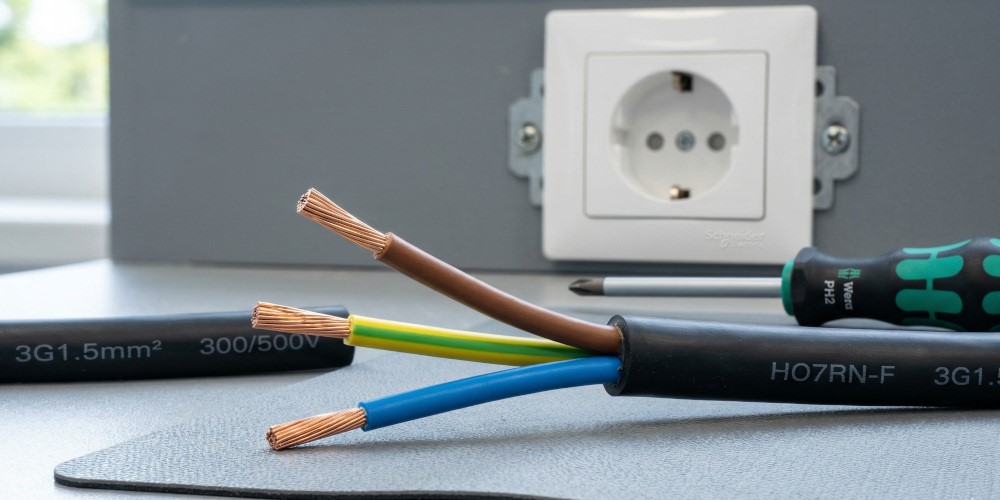
Color codes are a visual language that allows an electrician to identify the installation without room for error. The standard color codes applied in Europe and many other regions (IEC 60446) are as follows:
-
Phase (L): Usually symbolized by a Brown wire. However, in multi-phase systems (3-phase), black and grey colors are also used as phase lines.
-
Neutral (N): Standardized as Blue. It represents the return path of the circuit.
-
Earth (PE): Characterized by a Yellow-Green striped wire. This color combination is reserved worldwide exclusively for the earth line and cannot be used for any other purpose.
Important Reminder: Color standards may differ in older buildings. It is vital to perform a measurement with a multimeter or voltage tester before carrying out any operation.
Why Electrical Grounding is Essential and How to Implement It
Grounding (the PE line) is not just about having a wire in the panel; it is about that wire establishing a low-resistance contact with the earth through an electrode (grounding rod) outside the building. If grounding is not done correctly, any leakage in the devices is transmitted directly to the metal body, and electrocution occurs when the user touches it.
For more technical and practical information on how grounding should be done for a safe installation, what the resistance values should be, and Makel's professional solutions in this field, you can review our guide: how should electrical grounding be done? practical applications and Makel solutions.
Risks of Incorrect Connections
Mixing L, N, and PE wires can lead to more than just a non-functional system; it can cause fatal dangers:
-
L and N Swapped: Devices may work, but since the on-off switch of the device cuts the neutral instead of the phase, energy remains in the internal circuits even when the device is turned off. This leads to shocks during maintenance.
-
L and PE Swapped: This is the most dangerous scenario. Phase is given directly to the metal body of the device. Anyone touching the device is exposed to direct mains voltage.
-
N and PE Swapped: The device may work, but the Residual Current Device (RCD) in the circuit will trip constantly. The system detects that the return current is going through the earth instead of the neutral and cuts the power, interpreting it as a leakage.
Safe Installation and Setup with Makel
Electrical safety starts with the quality of the equipment used. Makel's switch and socket groups and switchgear products, which are fully compatible with standards, prevent the loosening of wire ends and the formation of arcs thanks to special designs in terminal structures.
Final Safety Reminders:
-
Always turn off the main circuit breaker before starting any work.
-
Always tighten wire ends with suitable ferrules in socket assemblies.
-
Ensure that you have an RCD with 30mA sensitivity in your distribution board.