

What is a Data Socket? The Right Choice for Office and Home Network Connections
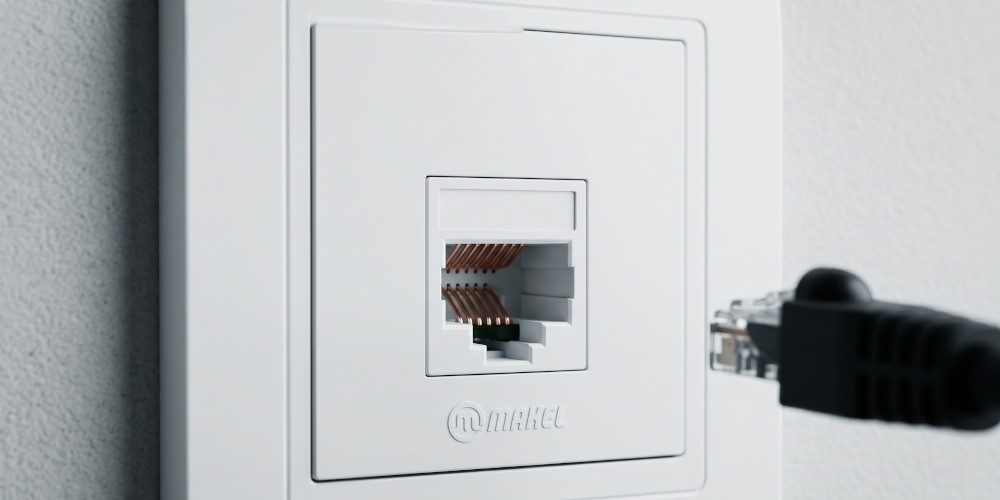
In the digital landscape of 2026, uninterrupted and high-speed internet access is no longer a luxury; it is a vital requirement for smart home ecosystems and remote work models alike. While Wi-Fi technologies have advanced significantly, a wired infrastructure remains the gold standard for high-data-intensity tasks and low-latency requirements. The point where this infrastructure reaches the end-user is the data socket (or internet socket)—the module where network cables are terminated behind the wall.
As a professional in the digital world, you likely recognize that speed is the ultimate currency. A correctly selected data socket is one of the most critical passive components directly affecting your network's overall performance.
What is a Data Socket and What Does It Do?
A data socket is an outlet unit where local area network (LAN) cables—typically CAT6 or CAT7—are terminated within a building. It allows devices such as computers, smart TVs, or modems to join the network via cables with RJ45 connectors. By hiding the cable clutter behind the walls, it offers a more aesthetic appearance while minimizing signal loss.
Wired connections are immune to the signal interference often experienced in wireless networks, especially during high-resolution video conferences, large data transfers, and the use of cloud-based software. This makes them the most reliable solution for maintaining connection stability in professional workflows.
How to Choose the Right Data Socket?
The most important criterion when choosing a data outlet is the category of your existing cabling infrastructure. If your infrastructure uses CAT6 cables, your socket module must also be a cat6 data socket; otherwise, the system will hit a bottleneck, performing only at the speed of the lowest-rated component.
-
CAT6 Data Socket: Supports data transmission up to 1 Gbps and remains the most balanced solution for homes and medium-sized offices in 2026.
-
Fiber Internet Socket: These sockets, where fiber optic cables are directly terminated, are designed for the 10 Gbps and higher speeds of the future.
-
Category Compatibility: If your installation is CAT7 or CAT8, shielded socket models should be preferred to prevent frequency interference (crosstalk).
To achieve both aesthetic and technical harmony, you can examine the modular data solutions in Makel’s wide collection of switches.
Data Socket Wiring Diagram and Installation
A data socket wiring diagram is generally based on two main standards: T568A and T568B. In 90% of modern installations, the "B" standard is used. During connection, the wire pairs (orange, green, blue, and brown) must be placed correctly into the terminals on the socket according to their color codes.
During installation, it is critical not to strip the wire ends more than necessary to maintain signal quality (twist protection). An incorrectly performed termination can lead to packet loss and decreased internet speeds. If you are performing a technical installation, it is always recommended to check the cable integrity with a professional tester.
Guarantee Efficiency with Cables
While wireless networks offer convenience in offices and modern homes, the key to performance is still hidden in wired systems. A correctly chosen data socket unlocks the true potential of your network. Makel's high-quality internal mechanism designs prevent data loss while blending perfectly with your decoration.