

What is a Commutator Switch? Correct Use of Electrical Switch Types in Lighting
In modern living spaces, lighting comfort is largely determined by establishing the correct switching infrastructure. Electrical installations feature various mechanisms that are often confused with one another but serve completely different functions. For staircases, long corridors, or living rooms with multiple lighting zones, selecting the right electrical switch types is crucial. This choice not only improves daily practicality but also directly contributes to energy efficiency in 2026.
This guide explores the structure of the commutator switch (commonly known as a double or two-gang switch) which provides multi-management from a single point, the two-way systems that serve as the hidden heroes of corridors, and what to look for when designing a safe light switch wiring diagram.
What is a Commutator Switch and How Does It Work?
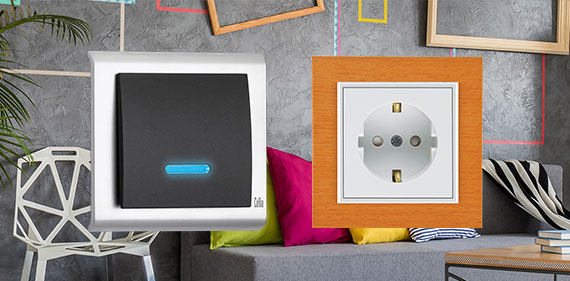
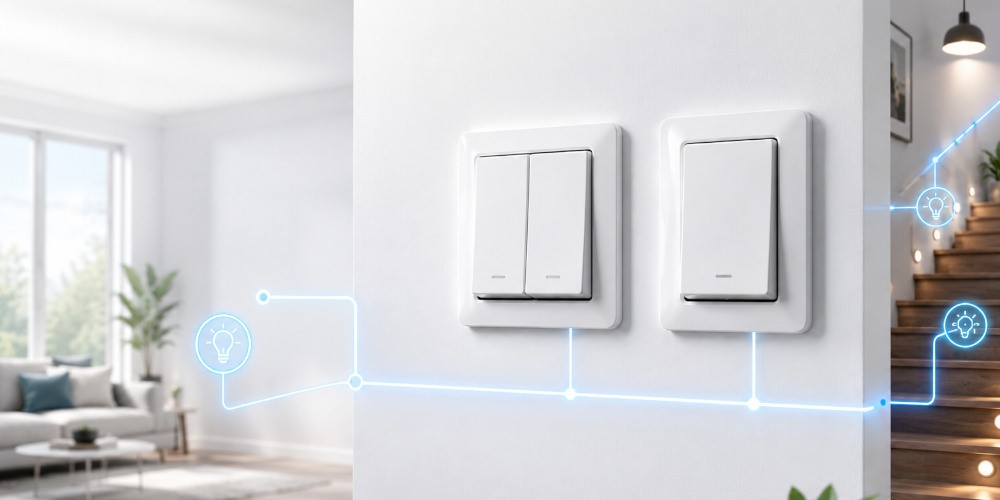
One of the most widely used light switch models in the industry, the commutator, is a mechanism that allows you to turn two separate lighting lines on and off independently from a single wall box. From the outside, it is easily distinguished by its two adjacent rocker buttons (keys).
The most typical application areas are living room chandeliers or bathroom/toilet combinations. If you want to turn on the lamps of a multi-arm chandelier in your living room in two stages, you need to use a commutator. Pressing the first button activates half of the chandelier, while the second button lights up the other half. By managing two different load lines from a single point, this system prevents the need for extra switch boxes on the wall, offering an aesthetic integrity.
Solutions for Staircases and Corridors: Commutator vs. Two-Way Switch
A common misconception in lighting projects is requesting a commutator switch when the goal is to control a single light from two different points. For lighting systems that need to be turned on from the bottom of the stairs and turned off from the top—or managed from both ends of a long corridor—a Two-Way Switch (known as Vaviyen in technical terms) is required.
-
Commutator Switch: Controls two separate light groups from a single location. It features two buttons.
-
Two-Way Switch: Controls a single light group from two different locations. It looks like a single-button switch from the outside but contains three terminals in its internal mechanism.
If you have a large architectural space where you want both multiple light groups and the ability to control them from two separate ends, "Double Two-Way" (Commutator Vaviyen) models can also be preferred. To discover the most suitable solutions for the architectural structure and decoration style of your living spaces, you can explore Makel's rich collection of switches.
Light Switch Wiring Diagram and Working Logic
To establish a safe and stable lighting circuit, the wiring diagram must be designed according to international standards. Incorrectly terminated connections can cause circuit breakers to trip constantly or leave residual energy in the sockets even when the switch is turned off.
Commutator Wiring Structure
There are three connection terminals on the back of commutator switches. One of these terminals is the "Common (Bridge)" input, where the live line—the Phase (L) wire coming directly from the grid—is connected. The other two terminals are reserved for the "Return" lines going to the first and second light groups to be controlled. The Neutral (N) line required for the lamps to complete the circuit bypasses the switch entirely and is run directly from the distribution board to the lamps.
Two-Way Wiring Structure
In a two-way circuit that provides control from two different points, two reciprocal switches are used. While the mains phase is connected to the common terminal of the first switch, the output to the lamp (phase return) is made from the common terminal of the second switch. The remaining two vacant terminals of both switches are joined together correspondingly with two traveler wires. Thus, whichever switch is pressed, the current changes direction to complete or interrupt the circuit.
Key Factors to Consider When Selecting a Premium Light Switch
The quality of the hardware used in your installation directly determines the operational lifespan of the system:
-
Contact Material: Preventing arc (spark) formation in mechanisms that are constantly turned on and off is critical. Makel's silver-alloy contact structures minimize electrical arcing, offering a safe switching lifespan across tens of thousands of cycles.
-
Ease of Installation: Having wire connection slots with robust screws or quick-connect (screwless) structures reduces workmanship errors during assembly and prevents overheating risks caused by loose connections.
-
Body Durability: Switch bodies manufactured from high-heat and impact-resistant polycarbonate material maintain their structural integrity both during installation and throughout long-term use.
The technical capacity and full compliance with installation standards of the modules you choose will guarantee your lighting comfort for many years.