


Residual Current Device Trends in 2026: Should You Buy Type A or Type S?
Electrical safety is not just about flipping a breaker. Advancing technology has radically changed the load profiles in our homes and facilities. While we used to have "linear" loads like incandescent bulbs and heaters, today we use inverter air conditioners, LED lighting, computers, and electric vehicle charging stations. This shift challenges the technology of Residual Current Devices (RCDs/RCCBs), the safety guards of electrical panels.
Approaching 2026, European standards and regulations point towards "immunized" protection types. So, which is right for your project or home: Type A or Type S? The answer is not "one is better than the other," but rather "which one should be used where."
Why Traditional (Type AC) Relays Are Becoming History
Type AC residual current devices, used commonly for years, detect only sinusoidal (wavy) alternating current leakage. However, today's electronic devices (washing machines, PC power supplies) emit "DC component" or "pulsating" leakage currents into the grid.
Type AC relays become blind to detecting these new generation leaks. Worse, they frustrate users by tripping unnecessarily (nuisance tripping) due to grid noise. The 2026 vision aims to restrict Type AC usage and make Type A and above models the standard.
Type A RCD: The New Normal and Electronic Protection
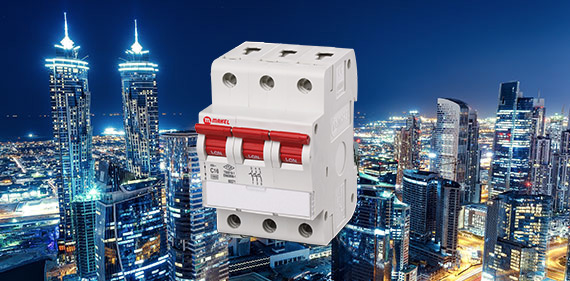
Type A residual current device detects both standard AC leakage and "pulsating DC" leakage originating from electronic circuits.
-
Usage Area: Socket circuits in residences, computers, dishwashers/washing machines, and LED lighting circuits.
-
2026 Trend: With the rise of home automation and sensitive electronics, Type A will be the "minimum standard" in sub-panels and end-user circuits.
If you experience frequent "unexplained" tripping in your home, your new generation devices are likely misleading your old Type AC relay. The solution is to update with the Makel Type A series.
Type S (Selective) Relay: The Unshakable Guardian of the Main Line
The letter "S" stands for Selective. The biggest feature of these relays is delayed tripping.
When leakage occurs in a facility or a duplex apartment, you want only the fuse in the room with the fault to trip. You do not want the electricity of the whole house to be cut off (staying in the dark). This is where "Selectivity" comes into play.
-
Working Principle: Type S is installed in the main distribution panel (post-meter input). Standard (30mA) relays are installed in sub-panels (floor or room panels).
-
Scenario: When a leak occurs in the kitchen, the kitchen relay (30mA) trips immediately. The Type S relay at the main input (usually 300mA) applies a "wait and see" strategy. Since the fault is cleared, Type S does not trip, and the rest of the house does not lose power.
-
Warning: Type S relays are generally used for "fire protection" (300mA) and system continuity, not for "life protection" (30mA). They are not used alone in sockets with direct human contact.
Table: Which Relay Where? (2026 Selection Guide)
The table below offers a clear roadmap for selecting the right product for your project.
|
Feature |
Type AC (Old Standard) |
Type A (2026 Standard) |
Type S (Selective/Delayed) |
|
Detected Leakage |
Only AC wave. |
AC + Pulsating DC (Electronic). |
Varies by type, but delayed. |
|
Usage Location |
Simple lighting (Not Recommended). |
Sockets, Offices, Home Electronics. |
Main Distribution Panel, Meter Input. |
|
Tripping Characteristic |
Instantaneous. |
Instantaneous. |
Delayed by a specific time. |
|
Nuisance Tripping Risk |
High (May trip in lightning/noise). |
Low (High immunity). |
Very Low (Only in major faults). |
|
Makel Solution |
Standard Series |
Makel Type A Series |
Makel Type S Fire Protection |
Electric Vehicles and Frequency Controlled Devices
When discussing 2026 trends, we must mention electric vehicle (EV) charging stations. If you have an EV charging unit at home, even Type A might be insufficient. At this point, Type B (detecting smooth DC) relays come into play. However, for standard in-apartment use, Type A is the safest and most cost-effective solution until 2026.
Do Not Leave Safety to Chance with Makel
A residual current device is not just a fuse for the installation; it is a life buoy for your family and business. Makel manufactures in compliance with international TS EN 61008-1 standards in its local production facilities.
Makel Residual Current Circuit Breakers offer high electrical and mechanical life.
-
For Sub-Panels: Protect your electronic devices and loved ones by choosing Makel Type A 30mA (Life Protection).
-
For Main Panel: Secure the entire installation and prevent unnecessary interruptions by choosing Makel Type S 300mA (Fire Protection).
Electricity is no joke. Prepare your installation for 2026 standards today.