


Power Quality Problems in Industry: How to Manage Harmonics, Flicker, and Low PF?
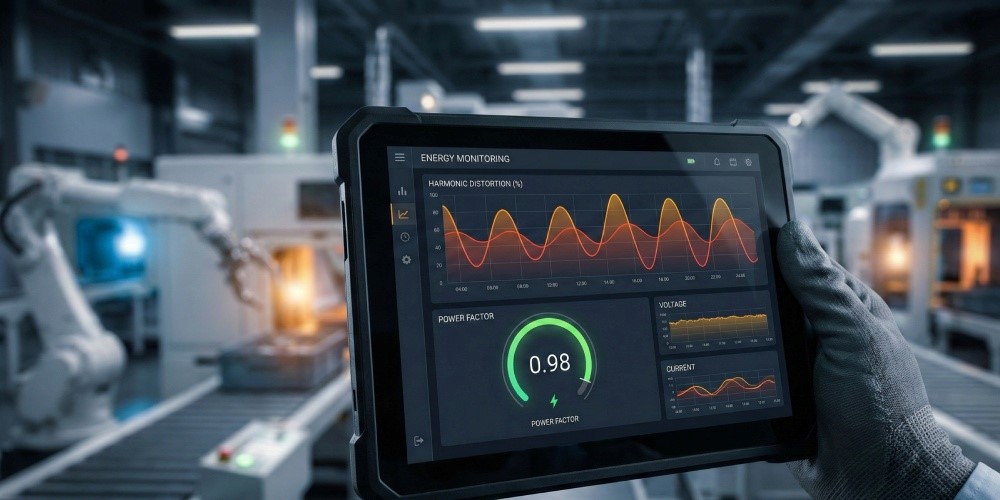
Production lines in industrial facilities are moving toward a more complex structure by 2026. Robotic arms, inverter-controlled motors, and high-efficiency LED lighting systems increase the diversity of loads drawn from the grid. This technological transformation increases energy efficiency while bringing along "power quality" problems. This condition, called dirty energy, shortens the life of sensitive electronic devices and leads to unexpected downtime.
Energy management is no longer just about knowing the total consumption. Modern facilities must see clearly where energy is overspent and where quality drops. Managing power quality problems is possible by developing efficiency strategies on a scientific basis.
1. Harmonic Distortions: Invisible Grid Pollution
Harmonics are distortions of the voltage and current waveform in the electrical grid. Non-linear loads (VFDs, computers, uninterruptible power supplies) emit harmonic currents into the grid. These distortions cause overheating of transformers, high currents in the neutral line, and electronic card failures.
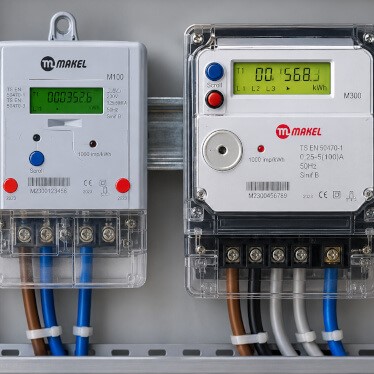
Real-time monitoring solutions detect these fluctuations within seconds. In facilities without measurement, harmonic problems are noticed only when serious equipment damage occurs. Smart measuring devices monitor harmonic levels instantly and present a graphical interface to the user. Thanks to this data, facility managers improve energy quality by using appropriate filtering methods.
2. Flicker and Voltage Fluctuations
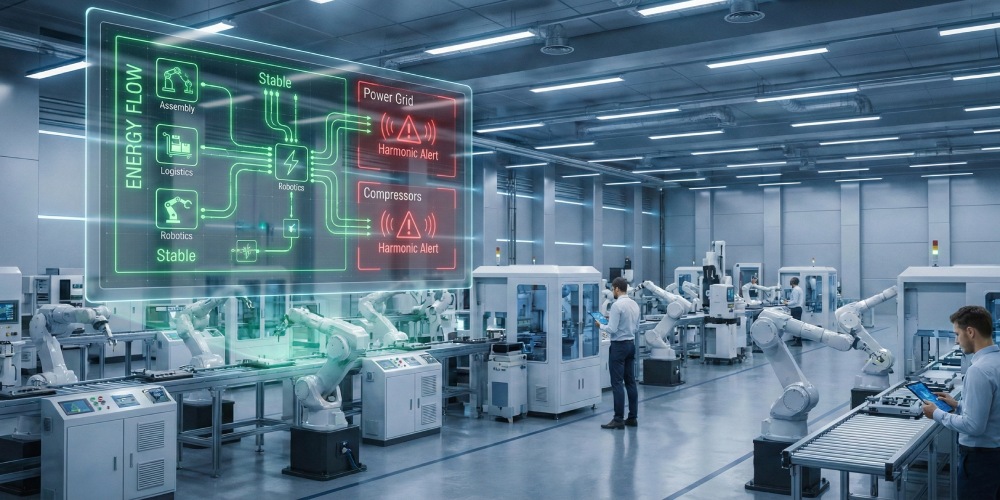
Flicker is the flickering effect created in light sources by rapid and repeating changes in voltage. Large motors starting or equipment drawing sudden loads, such as welding machines, trigger this problem. Flicker is not just a visual disturbance but also a sign that grid stability is impaired.
Energy monitoring systems observe instantaneous load fluctuations within a clear framework. When consumption limits are exceeded, the system immediately emits a warning signal. These warnings allow maintenance teams to notice voltage drops and sudden changes before equipment is damaged.
3. Low Power Factor (PF) and Reactive Penalties
Power factor is the ratio of active power to apparent power. Industrial motors and transformers draw reactive power. A power factor not close to 1 leads to inefficient use of grid capacity. A low power factor means high reactive energy costs and increased bills for businesses.
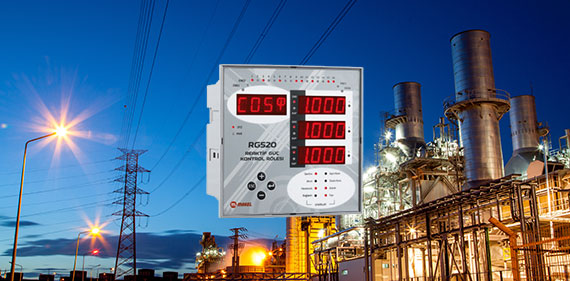
Energy monitoring systems continuously analyze reactive loads and power factor. Efficiency is increased by adjusting consumption according to the peak hours of the day. Thanks to this monitoring, the success of compensation systems is audited with concrete measurements.
Power Quality Problems and Solution Table
The table below summarizes the problems encountered in 2026 standards and the solution paths offered with monitoring systems:
|
Power Quality Issue |
Symptoms and Effects |
Monitoring System Solution |
|
Harmonics |
Device overheating, card failures. |
Instant harmonic analysis and cloud reporting. |
|
Flicker |
Flickering lights, system instability. |
Real-time data tracking and threshold warning. |
|
Low PF |
Reactive penalties, cable heating. |
Tracking reactive consumption with smart meters. |
|
Voltage Drop |
Unexpected downtime. |
Historical data analysis and reporting. |
|
Energy Waste |
Unnecessarily high bills. |
Identifyunnecessary consumption sources. |
The Role of Measuring Devices in 2026 Production Lines
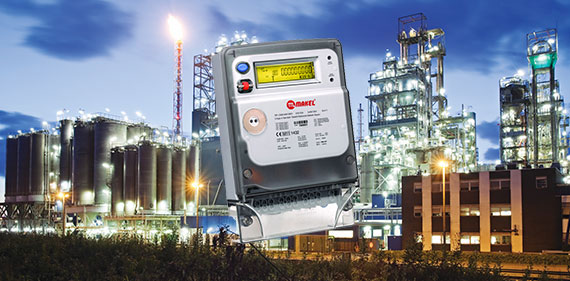
In 2026, the diversity of loads on production lines will render traditional measurement methods insufficient. Increasing efficiency is possible only to the extent that you can measure the energy performance of each load. Smart measuring devices collect data with a high precision and transfer it to central analysis platforms.
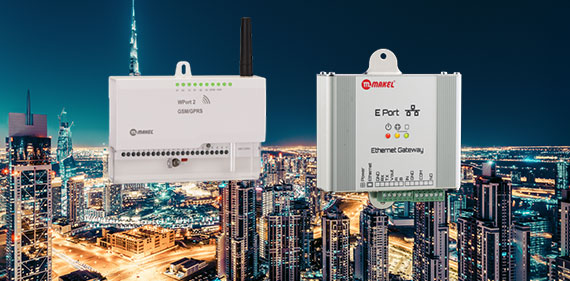
Cloud-based analysis platforms transform these digital traces into meaningful reports. Users can manage the facility's power quality instantly through a web browser or mobile devices. These systems make it more convenient to achieve sustainability goals and reduce the carbon footprint.
Frequently Asked Questions
- Is monitoring power quality suitable for SMEs? The scalability of the system allows small businesses to benefit from this technology easily.
- How is real-time data obtained? Measuring devices complete measurements within a few seconds and quickly send this data to cloud-based software.
- Is the installation process difficult? Systems have a modular architecture and can be effortlessly integrated into existing infrastructure.
Monitoring solutions at the heart of the transformation guide institutions toward a greener and more efficient future. Continuously improving energy efficiency is possible with a data-driven management model.