











Energy Efficiency Standards in Turkey in 2026: What Should Businesses Prepare For?
Energy Efficiency Standards in Turkey in 2026: What Should Businesses Prepare For?
Turkey is reshaping its energy policies in line with the Paris Agreement and the European Green Deal targets. Developments in industry and technology are altering energy consumption models. The Ministry of Energy and Natural Resources plans to implement stricter regulations by 2026. Businesses must prepare for rising costs and legal requirements. This process is directly related to the energy efficiency law 2026 vision.
Facilities aiming to maintain competitive power in the new era are modernizing their energy infrastructure. Sustainability is shifting from a preference to a commercial necessity. The Carbon Border Adjustment Mechanism (CBAM) holds critical importance for exporters. Businesses that do not use energy efficiently may face additional taxes and sanctions.
New Standards and Legal Obligations Expected by 2026
The National Energy Efficiency Action Plan clarifies the targets for 2026. Sectors with high energy density are the primary targets. The state provides incentives for projects that reduce energy consumption while imposing sanctions on those exceeding limits.
ISO 50001 Energy Management System Mandate Expands
Current regulations require businesses exceeding a specific Ton of Oil Equivalent (TOE) consumption to appoint an energy manager. The 2026 vision foresees lowering these limits. Small and medium-sized enterprises (SMEs) may also fall under the ISO 50001 mandate. This standard requires systematic monitoring and improvement of energy use.
Updates on Reactive Penalty Limits
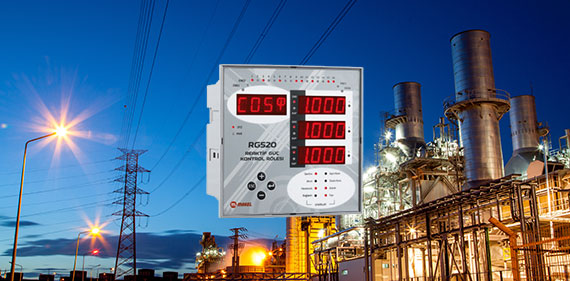
Reactive penalty limits, applied to protect electricity grid quality, may become more sensitive in the new period. Narrowing the inductive and capacitive limits is on the agenda. Poor maintenance of compensation panels or the use of outdated measurement devices results in high bill costs for businesses. Facility managers must track reactive energy consumption instantly.
Carbon Footprint Reporting and Digital Monitoring
Digital storage and reporting of energy consumption data are becoming mandatory. Manual meter reading methods are losing validity. Energy monitoring in businesses is a fundamental requirement for legal compliance. Data must be transparent and verifiable.
Principle of Measurability: Efficiency Starts with Monitoring
The first rule of energy saving is to measure consumption correctly. A business that does not know where and how much energy it spends cannot determine its saving potential. Motors, lighting systems, and HVAC units in industrial facilities are the largest consumption items.
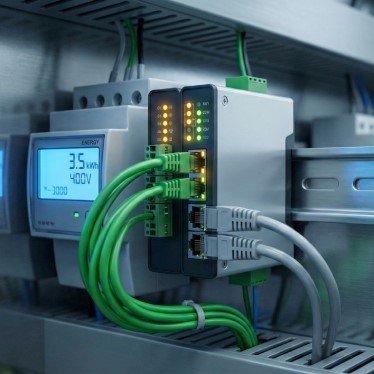
Monitoring each line separately reveals loss and leakage rates. At this point, industrial energy saving strategies come into play. Detecting load imbalances, predicting failures, and reducing maintenance costs is possible. Digital measuring instruments transfer this data to a central system. Managers make fast decisions with instant data.
Makel Solutions for Full Compliance with Standards
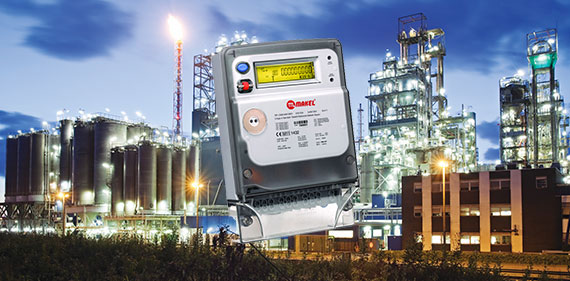
With its local production power and R&D experience, Makel facilitates the adaptation process of businesses to 2026 standards. Makel measuring devices optimize energy management with precise measurement capabilities.
Technical Advantages of Makel Panelmeters and Analyzers
Digital voltmeters, ammeters, and energy analyzers produced by Makel possess high accuracy classes. The devices detect harmonic distortions and analyze energy quality. Thanks to the Modbus RTU communication protocol, data integrates easily into automation systems (SCADA/PLC).
Precise Measurement: Provides high accuracy even at low currents.
Durable Structure: Resistant to harsh industrial conditions and electrical noise.
Easy Assembly: Offers ergonomic designs suitable for panel covers or rail-type mounting.
Local Production: Provides the advantage of fast technical support and spare part supply.
Makel products track reactive energy instantly. Thus, businesses take precautions before approaching penalty limits. Makel meters and measuring instruments offer a reliable infrastructure for facilities wanting to reduce energy costs.
Is Your Business Ready for 2026? Checklist
The table below clarifies the differences between the current situation and 2026 expectations. Businesses can use this table as a roadmap.
|
Criterion |
Current Status (2024-2025) |
2026 Expectations and Goals |
|
Energy Management System |
Mandatory for large enterprises. |
Expanded ISO 50001 mandate covering SMEs. |
|
Data Collection |
Often manual reading or monthly tracking. |
Real-time, digital, and remote energy monitoring in businesses. |
|
Reactive Penalty Limits |
Penalties based on current rates. |
Narrower tolerance ranges and stricter inspections. |
|
Reporting |
Annual declarations. |
Carbon footprint integrated, verifiable digital reports. |
|
Equipment Standards |
Standard efficiency class motors/devices. |
Requirement for high-efficiency (IE4/IE5) motor and equipment use. |
Shaping the Energy Future
Turkey's energy vision relies on efficiency and digitalization. Businesses should not view this transformation as a cost item. On the contrary, energy efficiency investments are a strategy that reduces operating expenses and increases competitiveness.
The time remaining until 2026 is an opportunity to fix infrastructure deficiencies. Makel stands by businesses in this transformation with its wide product range and technical expertise. Today is the right time to renew measurement devices, install monitoring systems, and start energy analysis. Managing energy means managing the future.