



What is a Distribution Box? Should You Choose Flush or Surface Mount?
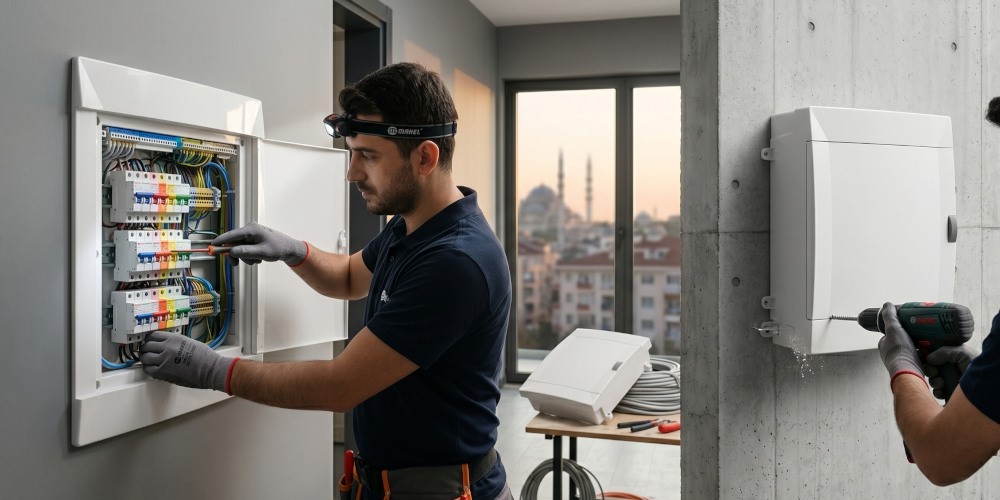
In any electrical installation, the central hub where energy is safely distributed and protected is the distribution box (commonly known as a fuse box). These units divide the main power from the grid into individual circuits (lines for rooms or appliance groups) and cut the electricity in case of overload or short circuits. They are the frontline soldiers of life and property safety. However, during the project phase or a renovation, the most frequent question arises: Should I choose a flush mount or a surface mount distribution box?
In this guide, we will examine the advantages of both solutions and the critical technical details you need to consider when choosing the right distribution boxes.
The Role of a Distribution Box in Your Home
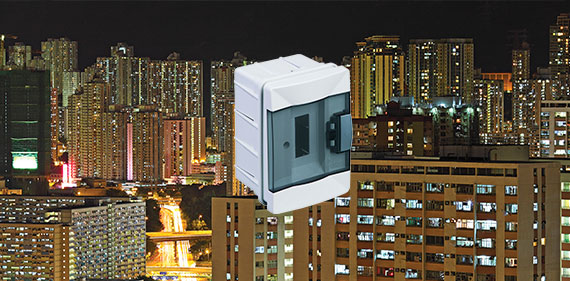
A distribution box is more than just a plastic or metal housing; it is a protective enclosure that keeps miniature circuit breakers (MCBs), residual current devices (RCDs), and other switchgear organized and secure. Beyond hiding cable clutter, it provides insulation against electrical arcs and protects sensitive components from external factors like dust and moisture.
Flush Mount Distribution Boxes: Sleek and Concealed
Flush mount group products are installed into a cavity carved into the wall. Once the installation is complete, only the door and the outer frame are visible on the wall surface.
-
Aesthetics and Style: This is the go-to choice for modern residential and office projects. Since it sits nearly flush with the wall surface, it eliminates visual clutter.
-
Space Saving: In narrow corridors or entryways, it doesn't create a physical protrusion, making it safer and more space-efficient.
-
Ideal Usage: Perfect for new constructions or extensive renovations where wall modifications are already being made.
Surface Mount Distribution Boxes: Practical and Accessible
Surface mount group products are mounted directly onto the wall surface. They do not require any wall carving or special cavities.
-
Easy Installation: Since there is no need to hollow out the wall, the installation time is significantly shorter. It is ideal for adding to existing installations or for quick fixes.
-
Accessibility: Cable entry-exit points and box replacements are much more practical compared to flush mount models.
-
Ideal Usage: These are best suited for industrial facilities, warehouses, workshops, or older buildings where the wiring is carried over the wall (via cable trunks).
4 Critical Criteria for Choosing the Right Box
Regardless of the mounting style, the technical features of the box determine your safety level in 2026:
-
Module Capacity: Choose boxes with 6, 12, 24, or more modules based on your circuit count. It is always recommended to leave 20% spare space for future additions like AC units or solar panels.
-
Material Quality (Halogen-Free): In case of a fire, "Halogen-Free" polymer bodies that do not emit toxic gases and do not propagate flames are a must-have for indoor safety.
-
IP Protection Rating: If the box will be installed in a humid or dusty area (balcony, workshop, etc.), it should have an IP40 rating or higher.
-
Installation Ease: The sturdiness of the DIN rail and the width of the cable passage areas make the electrician's job easier, reducing the risk of faulty connections.
Which One Should You Buy?
If you are in the process of building a new home or doing a full renovation, you should opt for flush mount models for their aesthetic appeal and space efficiency. However, in areas where breaking the wall is not an option or the wiring runs externally (basements, industrial buildings), surface mount models are the most logical and economical choice.
Makel’s distribution box series—featuring high heat resistance, stylish door designs, and installation-friendly features—brings both safety and aesthetics to your electrical infrastructure.