



Electrical Safety in Industrial Environments: The Importance of Modular Switchgear Devices
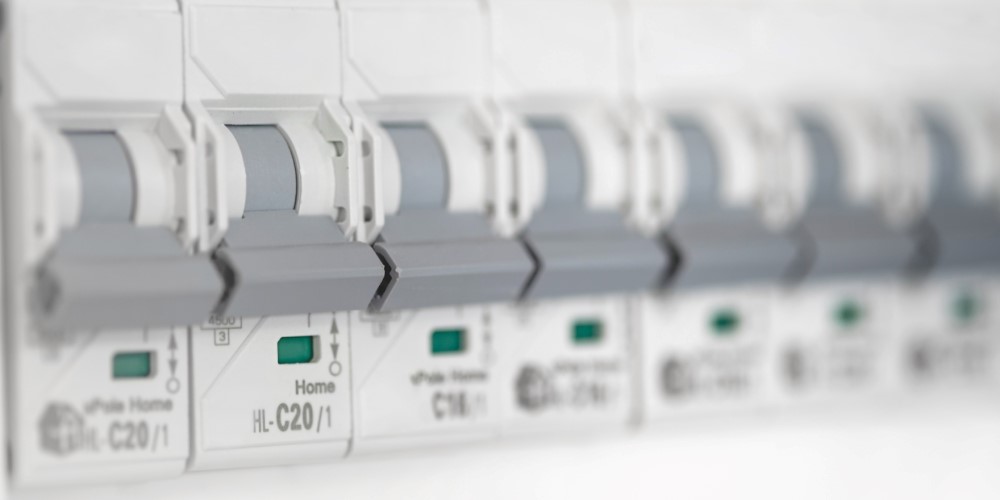
The Cornerstone of Electrical Safety in Industrial Fields: The Critical Role of Modular Switchgear Devices
In industrial facilities, workflows often proceed smoothly, with an almost visible rhythm; machines operate with the precision of a metronome, sensors flicker with bursts of light, and production lines hardly ever pause. Yet, the hidden face of electricity lies within the most delicate corner of this perfect order: a minor insulation fault, a sudden surge, or a slight relay delay… and suddenly, the entire system sinks into silence.
In this context, electrical safety has evolved beyond being merely an engineering concern—it has become a key guarantee of sustainable production itself. The most critical building block of this safety is the modular switchgear device: physically small but immeasurably powerful in impact.
Why Are Switchgear Devices So Crucial?
In essence, switchgear devices act as the brain of an electrical network. They direct current, detect faults, and, when necessary, switch the system into protection mode in an instant.
When a short circuit occurs on a production line, the problem doesn’t just damage equipment; it causes production losses, extended downtime, and increased safety risks.
According to statistics, about thirty percent of industrial electrical accidents stem from insulation failures, while roughly twenty-five percent result from overloads. In light of these facts, safety systems cease to be just “regulatory requirements” and instead become a vital necessity for maintaining operational continuity.
What Is a Modular Switchgear Device and What Does It Do?
A modular switchgear device consists of plug-and-play components designed for monitoring, protecting, and distributing electrical circuits. Thanks to this structure, complex systems can be broken down into smaller, more manageable parts.
A typical modular system generally includes:
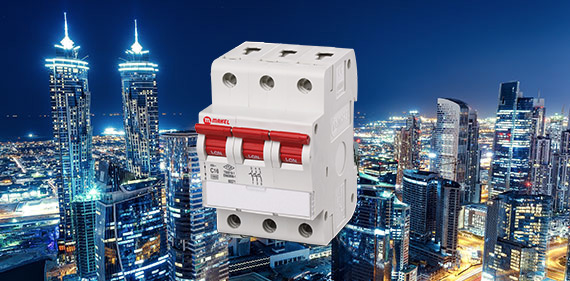
- Automatic Circuit Breakers (MCB, MCCB): Instantly interrupt circuits in cases of overload or short circuit.
- Residual Current Devices (RCCB): Safeguard human life by detecting earth leakage.
- Contactors and Time Relays: Automatically bring machines online in a controlled sequence.
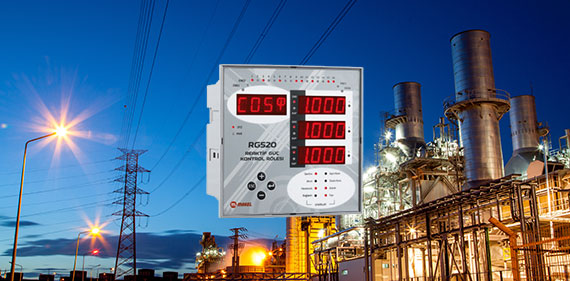
- Meters and Measurement Modules: Track energy consumption and generate precise data.
Because each module functions independently, only the faulty part needs to be replaced in case of failure. Maintenance time shortens, and production continues seamlessly.
The Critical Role of Switchgear Systems in Industrial Applications
Switchgear devices perform essential functions everywhere—from a small electrical cabinet to a vast power plant.
1. Production Lines
From CNC machines to robotic arms, all industrial equipment depends on stable, safe power flow. Modular systems regulate this flow and effectively suppress fluctuations.
2. Power Plants and Transformer Stations
Here, the mission extends beyond protection to include monitoring and remote control. When integrated with systems like SCADA or KNX, switchgear devices enable complete remote management.
3. Mining and Construction Sectors
Under harsh conditions—dust, humidity, vibration—high-protection-class equipment ensures continued performance without failure.
4. Commercial Buildings and Infrastructure
For lighting, HVAC, and elevator systems that operate nonstop, modular integration ensures reliable and safe operation.
Simply put, wherever energy goes, switchgear devices follow.
The True Advantage of Being Modular: Flexible Solutions and Uninterrupted Continuity
“Modular” isn’t just a technical label; it represents a strategic planning approach.
When a facility expands or adds a new production line, there’s no need to rebuild the entire system. Adding a few modules is enough.
Each module acts as an independent protection unit.
As a result, faults are detected within seconds, maintenance time is cut in half, and operational interruptions drop to a minimum.
Layered Dimensions of Safety in High-Voltage Systems
In high-voltage lines, the stakes are even higher. These systems can redirect thousands of amperes within seconds—an immense power that demands layered protection.
Hence, high-voltage switchgear systems aren’t just modular; they’re fortified with advanced protection technologies.
- Circuit Breakers: Detect fault currents and mechanically isolate the affected circuit.
- Protection Relays: Continuously monitor current, voltage, and frequency, automatically isolating any faulty segment upon detecting irregularities.
- Arc Fault Containment Systems: Activate the moment an arc appears, preventing fires and equipment damage.
- Insulation Monitoring: Constantly supervises insulation resistance, identifying leakage currents before they manifest.
Together, these functions ensure both stability and safety in high-voltage operations.
Vacuum and Gas Insulation: Compact, Safe, and Efficient
Modern systems increasingly rely on vacuum or gas-insulated switchgear technologies.
SF₆ gas, with its high dielectric strength, has long been an industry standard.
Data indicates that gas-insulated systems (GIS) operate with 99.98 percent reliability—virtually flawless performance.
This is why GIS is the preferred choice for transformer stations in compact urban areas.
Meanwhile, vacuum insulation is rapidly rising as an eco-friendly alternative. With minimal maintenance needs, low carbon emissions, and long service life, it’s becoming a leading sustainable option.
Smart Switchgear Systems: The Digital Shield of Industry
The new generation of switchgear devices has evolved beyond their mechanical origins, integrating intelligence into their core functions.
Equipped with IoT sensors, machine learning algorithms, and remote control infrastructure, these devices can monitor every pulse of the system with precision.
1. Advanced Monitoring and Diagnostics
They simultaneously track current, temperature, and insulation resistance in real time.
When an anomaly occurs, an alert is immediately sent to the operator.
2. Remote Operation and Control
Operators can now manage systems without entering the field—boosting both speed and safety.
3. Efficient and Effective Energy Use
Energy flow is finely tuned, eliminating idle consumption. The result: minimized losses and significantly reduced costs.
4. Predictive Maintenance
By integrating data analytics and machine learning, the system predicts faults before they happen and issues timely alerts. Unplanned downtime becomes a thing of the past.
5. Enhanced Safety Features
Self-diagnosing systems detect and analyze arc faults autonomously, providing maximum protection for both personnel and equipment.
Sustainable Safety Empowered by Energy Efficiency
Another notable advantage of modular switchgear devices lies in their contribution to energy efficiency.
Smart meters continuously monitor energy consumption, identifying even the smallest unnoticed losses.
This data allows energy management strategies to be refined intelligently.
A simple example illustrates the impact:
After modular switchgear systems were implemented in an automotive production facility, annual energy loss dropped by eight percent.
Additionally, production downtime caused by electrical faults decreased by seventy percent.
In short, tiny modules hold the power to create massive differences.
Frequently Asked Questions (FAQ)
1. In which sectors are modular switchgear devices typically used?
They form the backbone of safe power distribution across energy, manufacturing, automotive, chemical, food, and construction sectors.
2. What advantages do they offer over conventional systems?
Their flexibility allows seamless adaptation to changing conditions, simplifies maintenance, shortens downtime, and maximizes energy efficiency.
3. Why are smart switchgear devices so important?
Because their real-time monitoring, remote control, and predictive maintenance capabilities push electrical safety to an entirely new level.
Final Thought: The Future of Safety Will Be Defined by Modular Thinking
Today, electrical safety isn’t confined to fuses and breakers—digital intelligence now stands guard as well.
Modular switchgear devices, with their quick, intelligent, and resilient designs, are the silent heroes behind industrial stability.
The safety of any facility often depends on the flawless harmony of these small, easily overlooked components.
And perhaps the most essential question of all is this:
How would you describe the confidence you feel in your system’s ability to protect you?